
















Should Your Garment Factory Upgrade from Screen/DTG to a Hybrid Printing Line?
Estimated reading time: 15 minutes
Key Takeaways
- Hybrid printing merges the advantages of screen printing and DTG into one production line.
- Ideal for runs of 50 – 400 pieces, especially when variable data (names, numbers) is required.
- Significant savings on white ink and pretreatment costs compared to standalone DTG.
- Throughput can reach 4× that of DTG on mid-size orders, reducing turnaround times.
- Works on cotton, blends, polyester, and more without pretreatment – maximizing substrate flexibility.
Introduction
A detailed hybrid printer comparison reveals why more garment factories are upgrading from traditional screen printing or DTG (direct-to-garment) setups to hybrid printing lines. This shift combines the high-volume efficiency of screen printing with the personalization capabilities of DTG, creating a production sweet spot for orders ranging from 50 to 400 pieces.
For factory owners and production managers thinking whether to invest in a hybrid printer, this article breaks down the critical differences for you. Cost per piece, productivity, print quality, and flexibility across different run sizes. By examining 3 printing side by side, you’ll discover which technology delivers the best ROI for your facility. From this, you will know whether you should invest in a hybrid printer or not.
How Each Printing Method Works
Screen Printing
Screen printing works by pushing ink through a fine mesh screen that has been treated with a stencil pattern, allowing ink to pass through only in designated areas. Each color in a design requires its own separate screen, which must be mounted on the press. Typical setup costs include frames, mesh, emulsion, and skilled labor, ranging from $20 to $40 per screen depending on complexity and size.
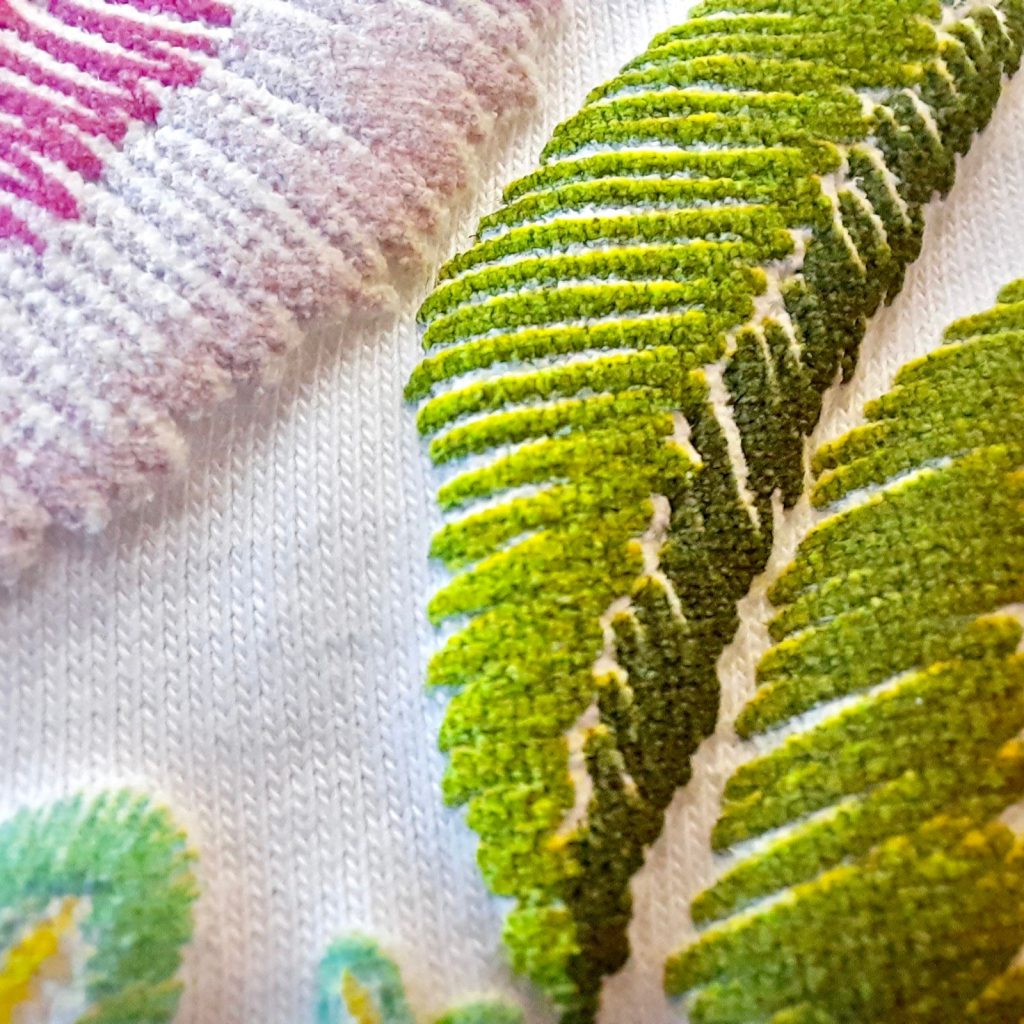
Once screens are registered and the press is running, screen printing delivers exceptional productivity: 400 to 800 pieces per hour for multi-color jobs. This makes it the lowest unit cost option for runs exceeding 400 pieces, with excellent durability on any fabric type. Screen printing excels at specialty effects like puff, foil, and high-density inks that create unique textures.
However, screen printing faces significant limitations when it comes to flexibility. Changing designs requires mounting new screens. The setup time (30-60 minutes per job) makes it uneconomical for small orders or jobs requiring variable data. For orders below 100 pieces or designs with more than six colors, setup costs quickly erode profitability.
For more insights, see Best of Both Worlds: Digital Hybrid and Variable Data Printing and Exploring the Canvas: Comparing the Pros and Cons of Different Garment Printing Equipment.
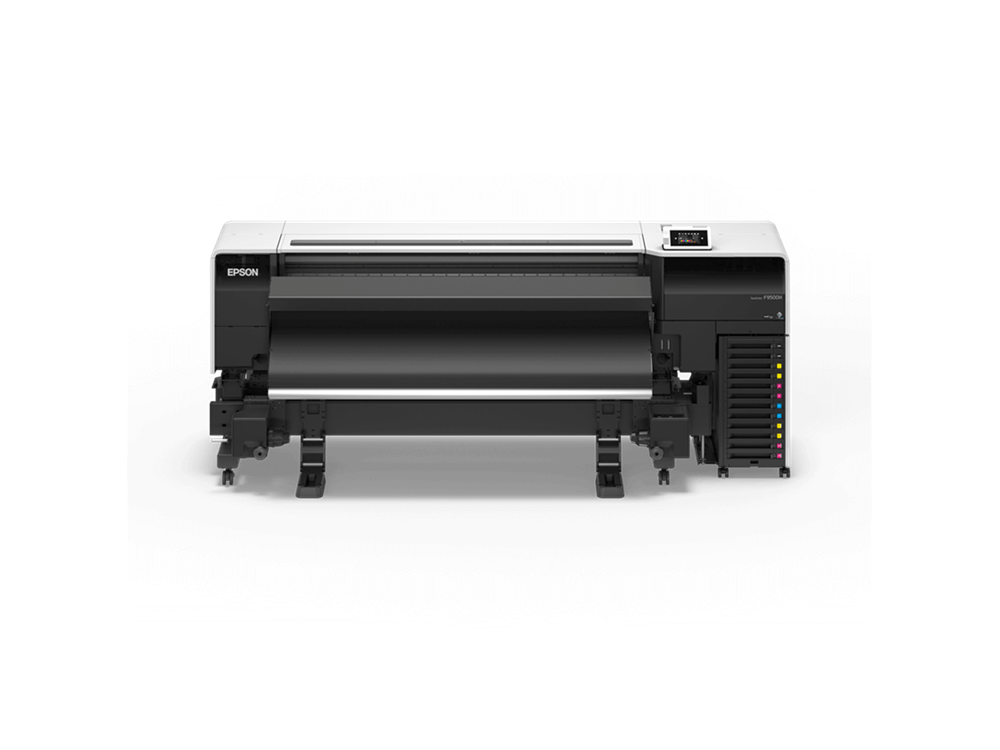
DTG Printing
DTG printing uses industrial inkjet printheads to spray CMYK ink (plus white) directly onto garments, functioning much like a desktop printer but designed for textiles. No screens are required, making it ideal for one-off pieces, short runs under 50 pieces, and designs requiring photographic detail or complex gradients.
The primary cost drivers in DTG are ink consumption. $0.30 to $1.20 per print on light-colored garments, and $1 to $3 on dark garments, plus pretreatment chemicals. DTG machines cycle at 40 to 70 pieces per hour depending on design complexity, image size, and whether white underbase layers are needed.
DTG shines in online fulfillment environments where customization and fast turnaround on small orders justify the higher per-piece cost. It allows factories to accept single-unit orders and complex full-color artwork without the screen setup investment. However, DTG becomes expensive on dark garments due to heavy white ink usage and pretreatment. And most systems perform best on 100% cotton or high-cotton blends. Printing on polyester or performance fabrics often requires additional steps or produces inconsistent results. When scaled to bulk orders of 200+ pieces, DTG’s slower throughput and consumable costs make it less competitive than screen printing.
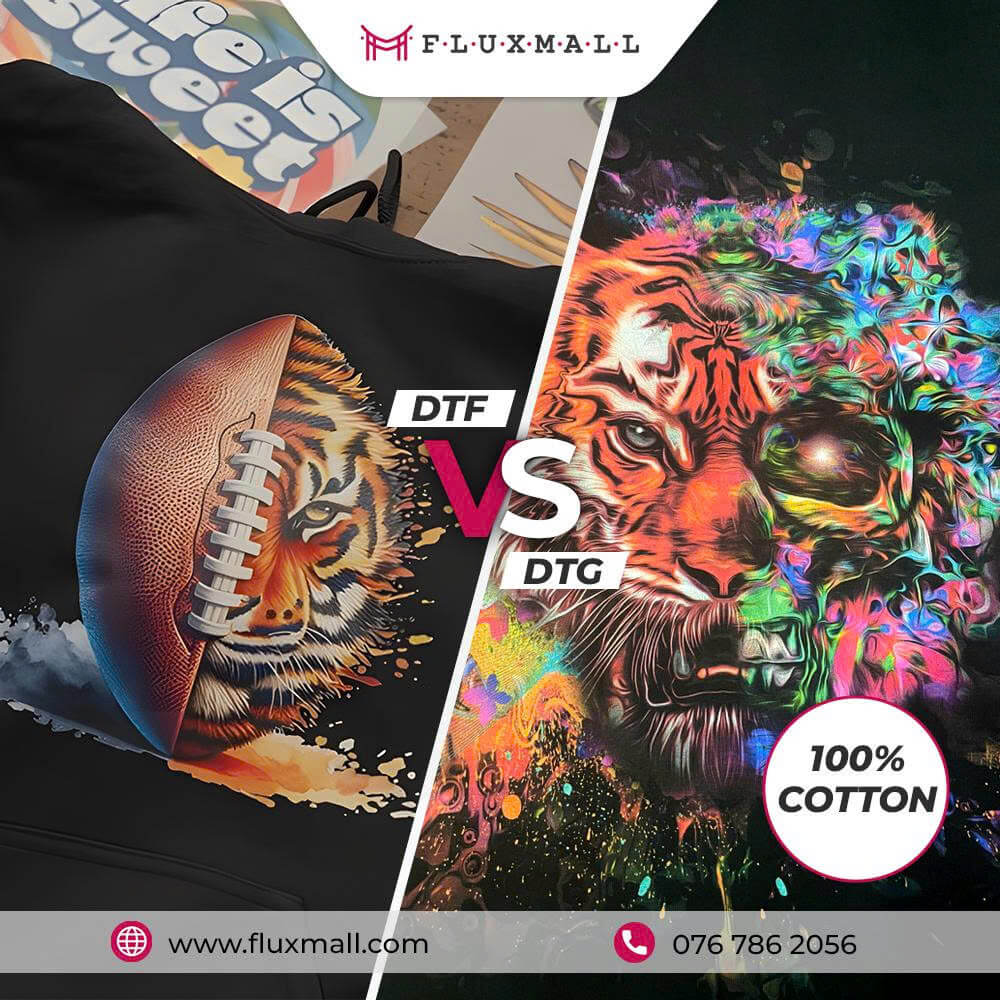
Additional perspectives can be found in this YouTube discussion and Is Hybrid DTG/DTF Printer Better Than Traditional DTG Printer?.
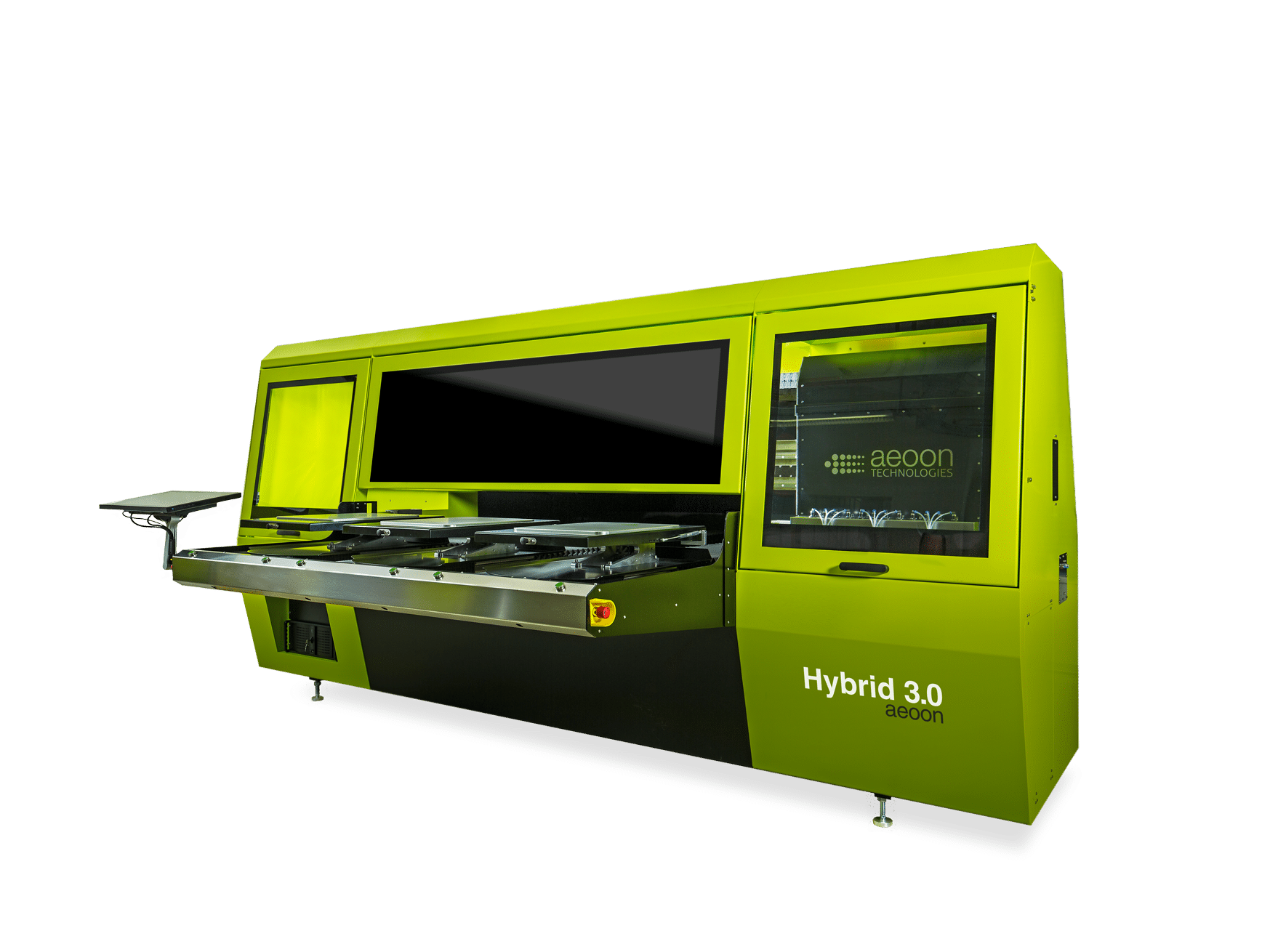
Hybrid Printing
Hybrid printing integrates a screen-printed underbase, typically white ink or special effect layers – with a digital CMYK or CMYK+W top layer, often within the same inline carousel or coordinated press system. This method combines the durability and cost efficiency of screen-printed whites with the variable data capabilities and gradient reproduction of digital inkjet technology.
The process begins with a screen station laying down a white or colored underbase, which is then flashed to cure. The garment rotates to a digital printhead station where full-color artwork, gradients, and variable data are applied directly over the screen base. This eliminates the need for heavy digital white ink layers and the pretreatment step required by standalone DTG, significantly reducing ink costs and cycle time.

The Benefits of Hybrid Printing
Hybrid printing occupies the sweet spot between screen and DTG: runs of 50 to 400 pieces that require multiple colors, photographic detail, or personalization. It works seamlessly on cotton, cotton blends, polyester, and tri-blends when a proper blocker base is used. On this, it gives garment factories the substrate flexibility that screen printing offers without sacrificing the design versatility of digital.
The benefits of hybrid printers include:
- Four-times-faster throughput compared to DTG on medium runs.
- Up to 4× lower white ink costs.
- The ability to print variable data at screen-press speeds.
- Compatibility with specialty effects (metallic, glow-in-the-dark, or textured inks) applied via the screen station.
For a hybrid printer for garment factory applications, this means a single production line can handle everything. From team uniforms with individual names to limited-edition fashion runs with complex artwork, all without the bottleneck of screen changes or the expense of DTG consumables on every piece.
Learn more from Digital Versus Hybrid Printing: What Are They and Who Should Consider It and this YouTube discussion.
Hybrid vs Screen vs DTG: Side-by-Side Metrics
Understanding the practical differences in a hybrid printer comparison requires examining four critical performance metrics: cost per piece, productivity, print quality, and flexibility. Each printing method has a distinct performance profile that makes it optimal for certain order types and run sizes.
Cost Per Piece
500-Piece Run (Dark Garments)
| Method | 500-Piece Run (Dark Garments) | Key Cost Drivers |
|---|---|---|
| Screen Printing | $0.15–$0.45 per piece (after $150 setup) | Frame/screen costs, labor for registration, ink (low per-piece cost). |
| DTG Printing | $3–$5 per piece | Heavy white ink usage ($1–$3/print), pretreatment chemicals, slow cycle time. |
| Hybrid Printing | $1–$2 per piece | White via screen (4× cheaper than digital white), minimal pretreatment, faster cycles. |
Hybrid vs Screen Printing Cost
The hybrid vs screen printing cost advantage becomes clear on runs below 300 pieces. Where screen printing requires separate screens for each color, adding $20 to $40 per screen and 30+ minutes of setup time, hybrid uses a single white underbase screen plus digital color, eliminating the need for multiple color separations. This translates to zero extra screens for complex multi-color artwork and significantly faster job changeovers.
Hybrid vs DTG Printing Cost
In the hybrid vs DTG printing equation, hybrid printing saves approximately 4× on white ink costs because the screen station lays down the white underbase in a single pass using plastisol or water-based screen ink (roughly $0.05–$0.15 per print) instead of multiple digital white ink layers ($1–$3 per print on dark garments). Pretreatment is minimized or eliminated entirely in hybrid workflows, further reducing per-piece cost.
For a 500-piece order of dark T-shirts with full-color graphics, screen printing still offers the lowest unit cost if the design uses three colors or fewer. But once the design requires four or more colors, gradient fills, or variable data (names, numbers), hybrid printing becomes more economical because it requires only one screen (white) plus digital color, avoiding the exponential screen costs of traditional multi-color screen jobs.
See related details in Best of Both Worlds: Digital Hybrid and Variable Data Printing and this YouTube discussion.
Productivity / Throughput
| Method | Throughput | Setup Time | Best Use Case |
|---|---|---|---|
| Screen Printing | 500–900 pcs/hr | 30–60 minutes per job | High-volume repeat orders (1,000+ pieces) |
| DTG Printing | 40–70 pcs/hr | Minimal (5 minutes) | On-demand, single-piece fulfillment |
| Hybrid Printing | 200–400 pcs/hr | 10–20 minutes (one screen registration) | Medium runs with customization (50–400 pcs) |
Screen printing delivers unmatched speed once the press is running, but every job change requires removing old screens, burning and registering new ones, and running test prints, a process that can take 30 to 60 minutes and ties up expensive equipment. For factories running diverse order mixes, this setup time becomes a hidden cost that reduces effective throughput.
DTG operates continuously with virtually no setup beyond loading the artwork file, making it ideal for single-piece and small-batch orders. However, the slow cycle time – especially on dark garments – making it impractical for orders exceeding 100 pieces.
Hybrid printing achieves 200 to 400 pieces per hour, running approximately 4× faster than DTG once the white underbase screen is registered. Because the system uses a single carousel integrating both screen and digital stations, operators avoid the workflow interruptions of moving garments between separate machines. The inline flash unit cures the screen underbase in seconds, allowing the digital station to immediately apply color without pausing for pretreatment or multiple white passes. According to industry data, this integrated workflow can complete a 200-piece order with variable names in under an hour. A significant change because that job would take 3 to 5 hours on DTG and require burning 3 to 6 screens for traditional screen printing.
More info on productivity gains can be found in Best of Both Worlds: Digital Hybrid and Variable Data Printing.
Print Quality
Each printing method produces a distinct visual and tactile result that suits different design styles and end-use requirements.
Screen Print Quality
Screen printing delivers the highest opacity and vibrancy for solid colors, with ink sitting on top of the fabric in a durable, flexible layer. The method excels at specialty inks: puff for 3D texture, foil for metallic shine, high-density for raised prints, and glow-in-the-dark or reflective inks for functional apparel. However, reproducing photographic images or smooth gradients requires costly halftone screens and skilled press operators, and any color blend beyond simple duotones becomes prohibitively complex.
DTG Print Quality
DTG produces photorealistic images with smooth gradients, fine details, and virtually unlimited colors, all with a soft hand feel. It handles complex artwork (portraits, landscapes, intricate illustrations,…) without additional setup cost. The trade-off is less vibrancy on dark garments and limited ability to reproduce specialty effects like metallic or textured finishes.
Hybrid Print Quality
Hybrid printing combines the opacity and texture capabilities of screen with the gradient precision of digital. The screen-printed underbase delivers solid, vibrant whites or specialty effects (metallic, glitter, or textured inks), which are flashed and overprinted with digital CMYK to add photographic detail, smooth color transitions, and variable data. This layered approach produces prints with excellent opacity, fine detail, and consistent hand feel. The reason is the thinner digital layers sit on top of the screen base rather than heavy digital whites base.
Hybrid systems support creative techniques not possible with standalone screen or DTG, such as printing a metallic gold screen base, flashing it, then adding digital shading and highlights to create a dimensional effect. This flexibility makes hybrid ideal for premium apparel lines, licensed sports merchandise, and fashion-forward designs requiring both bold graphics and subtle gradients in a single print.
For deeper analysis, see Best of Both Worlds: Digital Hybrid and Variable Data Printing, Exploring the Canvas, and this YouTube discussion.
Flexibility & Personalization
The ability to adapt quickly to design changes, print on diverse substrates, and add variable data separates hybrid printing from traditional methods.
Screen Printing Flexibility
Screen printing requires re-burning screens for any design change, making it inflexible for personalized orders or trend-driven fashion where designs may change weekly. While screen works on virtually any fabric (cotton, polyester, nylon, blends), the setup burden makes it impractical for anything other than repeat orders.
Screen Printing Flexibility
DTG offers ultimate design flexibility: each piece can be completely different with no additional cost or setup. This makes it perfect for e-commerce fulfillment, sample production, and test marketing. However, DTG’s substrate flexibility is limited. It performs best on 100% cotton and high-cotton blends. With polyester and performance fabrics, it often requires special pretreatments, modified ink sets, or producing inconsistent color reproduction.
Screen Printing Flexibility
Hybrid printing delivers variable data printing at screen press speeds, allowing factories to produce team rosters with individual names and numbers, event merchandise with unique attendee information, or limited-edition fashion runs with serialized numbering, all without slowing down the production line. Because the white underbase comes from the screen station, no pretreatment is required, opening hybrid systems to all fabric types: cotton, polyester, tri-blends, performance fabrics. And it even challenge substrates like nylon and spandex blends when proper blocker bases are used.
This combination of substrate versatility and variable data capability makes the benefits of hybrid printers especially valuable for garment factories serving diverse markets. A single hybrid printer for garment factory applications can handle corporate uniform orders, retail fashion with complex artwork, and team sports (numbered jerseys) without the overhead of separate printing systems.
Upgrade Paths to a Hybrid Printing Line
Transitioning to hybrid printing doesn’t require abandoning existing equipment or retraining your entire team. Three practical upgrade to hybrid printing paths suit different factory profiles and investment levels.

Path 1: Retrofit Existing Automatic Carousel
For factories already operating automatic screen presses, the most cost-effective entry into hybrid is adding a digital printhead carriage to the existing carousel. This approach integrates one or more industrial inkjet heads (typically white + CMYK or CMYK only if white is already handled by screen) into an open platen station on your current press.
Hardware investment ranges from $80,000 to $120,000 USD depending on printhead configuration and automation level. Additional requirements include an extra flash unit to cure the screen underbase before the digital station, RIP software to manage digital files and variable data, and a compressed air supply at 70–90 psi. Electrical needs (380V three-phase power) match existing automatic screen press requirements, so most facilities require minimal electrical upgrades.
The key advantage of this path is workflow continuity: operators continue using familiar screen press procedures for registration, loading, and unloading, simply adding a digital printing step mid-cycle. Setup time drops dramatically because you’re only registering one screen (white underbase) instead of four to eight color screens, and the digital heads handle all color and detail work. Factories using this approach report reducing job changeover time from 45–60 minutes to 10–15 minutes.
Path 2: Fully Integrated Hybrid Production Line
Factories currently relying on multiple DTG units and separate pretreatment stations can replace it with a fully integrated hybrid line. These turnkey systems, such as the Fluxmall Textalk TGR, combine screen and digital stations on a single carousel. These systems also include inline curing, automated garment loading options, and touchscreen control interfaces.
Investment ranges from $150,000 to $250,000 USD, but this replaces three to four standalone DTG printers. Thenceforth, it eliminates pretreatment equipment, and consolidates maintenance, consumables inventory, and floor space. A fully integrated system also centralizes RIP software, color management, and production scheduling. The integrated inline flash means no separate curing oven, and removing pretreatment cuts consumable costs by 30 – 40%.
Path 3: Modular Scalability
Factories uncertain about volume projections or testing hybrid for specific product lines can start with a modular hybrid configuration. It is a single-station digital module integrated with a semi-automatic or small automatic screen press. Initial investment starts around $60,000 to $80,000 USD, with the ability to add additional digital stations later as production grows.
This approach minimizes upfront capital risk while proving the technology on real orders. Operators learn the same RIP software, printhead technology, and consumables used in full-scale hybrids, ensuring smooth scaling. Many begin with variable data jobs, team sports uniforms or personalized corporate apparel, then expand once ROI is proven.
Facility Requirements Across All Paths
Hybrid printing facility needs mirror those of automatic screen presses: compressed air at 70 – 90 psi, 380V three-phase electrical service, and adequate ventilation if using plastisol inks. Most hybrid systems include touchscreen RIP interfaces that integrate with order management software via CSV or API, automating variable data without manual file setup. That’s where hybrid printing truly excels in productivity.
ROI & Financial Models
Answering “should I invest in a hybrid printer?” requires concrete financial analysis based on your current production mix, order profile, and growth targets. The following scenarios model real-world upgrade economics for DTG-focused and screen-focused factories.
Scenario A: Small DTG Shop (1,000 pcs/month, 70% dark garments)
Current DTG Cost Structure:
• Light garments (300 pcs/month): $1.20/pc ink + pretreat = $360/month
• Dark garments (700 pcs/month): $4.80/pc ink + pretreat = $3,360/month
• Total monthly consumable cost: $3,720
• Labor: 25 hours @ $20/hr = $500/month
• Total monthly operating cost: $4,220
Hybrid Cost Structure (same volume):
• Light garments: $0.90/pc = $270/month
• Dark garments: $1.60/pc = $1,120/month
• Total monthly consumable cost: $1,390
• Labor: 18 hours @ $20/hr = $360/month
• Total monthly operating cost: $1,750
Monthly savings: $2,470
Hybrid system investment: $120,000
Simple payback period: 48.6 months at current volume
With 20% annual volume growth, the cumulative payback can shrink to around 36 months. Additional revenue streams come from polyester team jerseys or corporate polo personalization not feasible or too costly with DTG alone. Factoring these in can shave the payback to 24–28 months.
Scenario B: Mid-Size Screen Shop (10,000 pcs/month, mixed order sizes)
Current Screen Cost Structure:
• Avg order size: 250 pcs (40 orders/month)
• Setup labor per order: 45 min @ $25/hr = $18.75 = $750/month total
• 4 screens/order @ $30/screen, 20% reused = $3,840/month
• Ink & consumables: $0.18/pc = $1,800/month
• Total monthly operating cost: $6,390
• Lost revenue from declined variable data orders: ~800 pcs/month @ $4 margin = $3,200/month
Hybrid Cost Structure (same volume):
• Setup labor per order: 15 min @ $25/hr = $250/month
• 1 white screen/order @ 80% reuse = $240/month
• Ink & consumables: $0.22/pc = $2,200/month
• Total monthly operating cost: $2,690
Monthly savings: $3,700
Hybrid system investment: $180,000
Simple payback period: 48.6 months
Recapturing variable data orders adds $3,200/month, cutting the payback to around 26 months. Taking on 100–300 piece jobs that were once unprofitable can reduce payback below two years in many cases.
ROI Formula for Your Factory
Payback Period = Total Capital Investment ÷ (Monthly Savings + New Monthly Margin)
Should I Invest in a Hybrid Printer? Decision Checklist
Hybrid printing delivers positive ROI when your factory profile includes three or more of these factors:
- Order mix includes 50 – 400 piece runs.
- High percentage of dark garments where DTG ink costs are high.
- Frequent design changes or variable data requirements.
- Multi-color artwork (4+ colors) driving screen costs up.
- Diverse fabric types (cotton, polyester, blends, performance fabrics).
- Rush orders or fast turnaround requirements.
- Growth in personalization or E-commerce segments.
If you check four or more boxes, a hybrid upgrade often pays for itself in 18 – 30 months. While opening higher-margin markets that screen-only or DTG-only operators struggle to serve profitably.
More insights at Best of Both Worlds: Digital Hybrid and Variable Data Printing and this YouTube resource.
Fluxmall Hybrid Solutions Spotlight
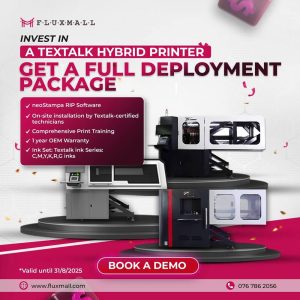
Fluxmall specializes in hybrid and digital textile printing solutions engineered for high-volume garment factories in competitive global markets. The company’s flagship Textalk TGR hybrid carousel integrates industrial-grade screen stations with advanced digital printheads on a single synchronized platform, eliminating workflow gaps and maximizing floor space efficiency.
Key features of Fluxmall hybrid systems include:
- Dual-mode DTG/DTF printhead technology: Same printheads handle both direct-to-garment and direct-to-film techniques.
- Automatic inline flash curing: Integrates infrared or forced-air flash units to cure screen underbase in seconds for uninterrupted digital overprinting.
- Touchscreen RIP with variable data integration: Imports CSV or connects via API to order management, automating personalization without manual file work.
- Three-year printhead warranty: Longer coverage compared to industry-standard one-year, reducing total cost of ownership.
- Asia-Pacific service network: Fast technical support and parts distribution, crucial for minimizing downtime.
Fluxmall’s hybrid printer for garment factory applications addresses the challenges of medium to high-volume operations (5,000 – 50,000+ pieces per month) where uptime, consumable costs, and production flexibility directly impact margins. Their engineering team provides on-site workflow analysis and custom configurations, matching carousel size, printhead count, flash placement, and automation level to each factory’s unique needs.
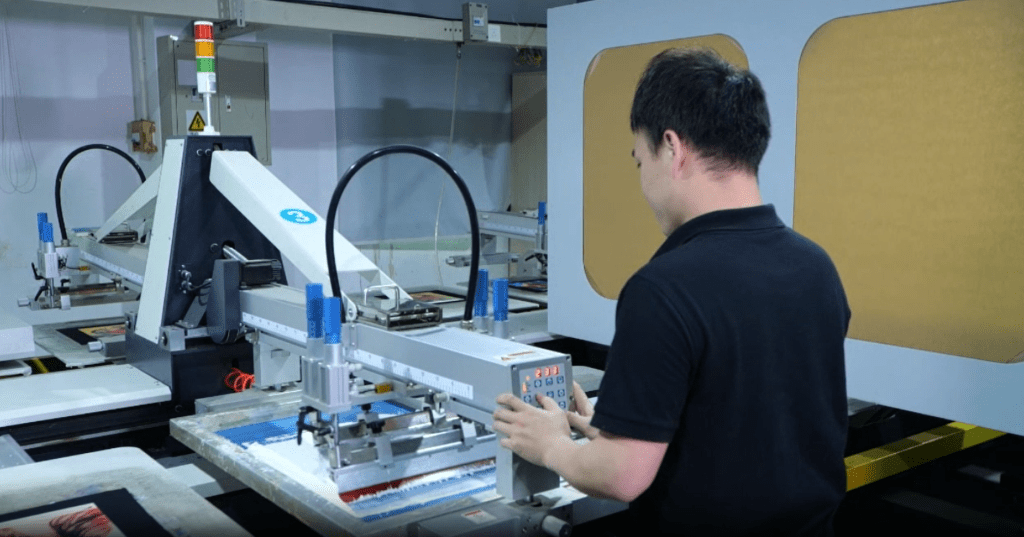
To explore how the Textalk TGR can streamline your production and improve your cost structure, visit Fluxmall’s hybrid printing category for detailed specifications, video demos, and customer case studies illustrating real-world success.
Frequently Asked Questions
Hybrid vs screen printing: do I still need screens?
Yes, but dramatically fewer. In hybrid printing you use screens only for the underbase layer (white or specialty effects). Traditional multi-color screen printing might require multiple screens and lengthy setup. Whereas. hybrid needs just one white screen plus digital color. Factories report cutting screen costs by up to 80% because one underbase screen can be reused across many jobs.
Hybrid vs DTG printing: do I need pretreatment?
No. Standalone DTG relies on chemical pretreatment for dark or synthetic garments. Hybrid printing eliminates that step because the screen underbase naturally bonds to the fabric without needing pretreatment chemistry. This cuts consumable costs, removes a messy station, and reduces daily maintenance.
What fabrics can I print with hybrid?
Hybrid printing accommodates cotton, cotton/poly blends, tri-blends, polyester, performance fabrics, nylon, and even spandex blends when using appropriate underbase inks. The screen-printed layer handles fabric challenges and blocks dye migration, while the digital layer provides unlimited color detail.
What maintenance is required for hybrid printing?
Daily tasks include automated printhead wiping and nozzle checks, similar to DTG. Screen-based components follow standard screen press upkeep (cleaning squeegees, monitoring flash temps). Removing the pretreatment process drastically reduces cleanup. Overall maintenance is on par with a single screen press plus minimal digital tasks.
How long does it take to train operators on hybrid systems?
Operators experienced with screen presses adapt quickly, needing only basic digital RIP and printhead instruction. DTG operators face a slight learning curve on screen handling but are already familiar with color management and printhead care. Most staff reach proficiency within a few days of hands-on training.
Conclusion
This comprehensive hybrid printer comparison demonstrates clear advantages in cost efficiency, production speed, and design flexibility for garment factories operating in the 50 – 400 piece order range or those requiring variable data and multi-substrate capability. Hybrid printing delivers up to 4× lower white ink costs, 4× faster throughput, and the ability to handle any fabric. This technology combines the best attributes of screen and digital while eliminate the major limitations of each standalone method.
So should you invest in a hybrid printer? If your order mix includes frequent multi-color mid-sized runs, dark garments, personalization needs, or diverse fabric requests, the ROI modeling in this article suggests the payback can be as short as 18–30 months. By bridging the gap between screen’s efficiency and DTG’s flexibility, hybrid printing sets your facility up for growth in premium niches and personalized apparel.
Ready to upgrade? Contact Fluxmall to design a custom solution for your workflow, or schedule a live demo to see the Textalk TGR in action. With hybrid technology, garment decorators no longer have to compromise between screen’s volume advantages and DTG’s design freedom. The best of both worlds is here today.