


















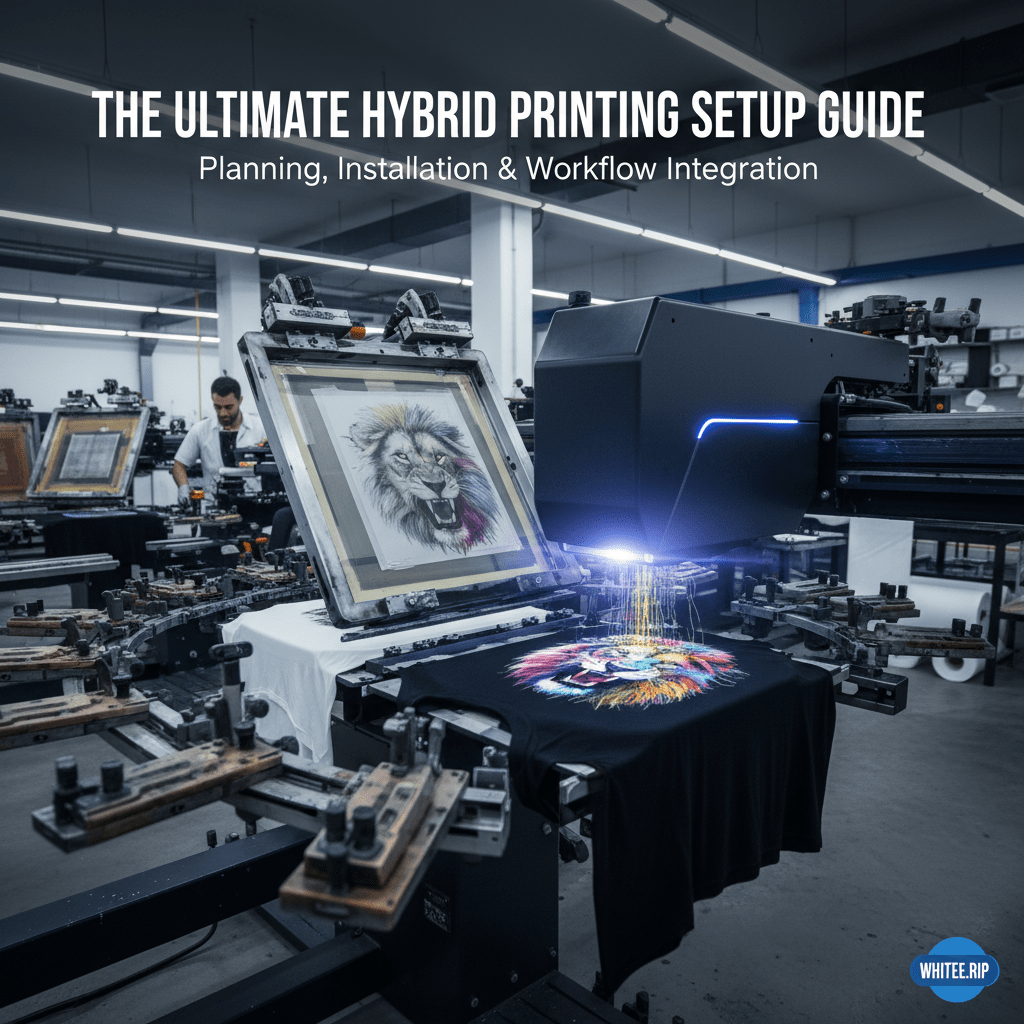
The Ultimate Hybrid Printing Setup Guide: Planning, Installation & Workflow Integration for Screen-Print Shops
Estimated reading time: 9 minutes
Key Takeaways
- Hybrid printing merges conventional screen printing with inline digital modules for versatile production runs.
- A well-planned hybrid printing setup can seamlessly handle both long-run orders and personalized short orders.
- Workflow coordination is essential for syncing operators, equipment, and production timelines.
- Proper layout planning and operator training ensure increased efficiency and minimal bottlenecks.
- By integrating a hybrid system, shops can leverage the best of screen and digital in one pass.
Table of contents
Hybrid Printing Setup Plan and Installation
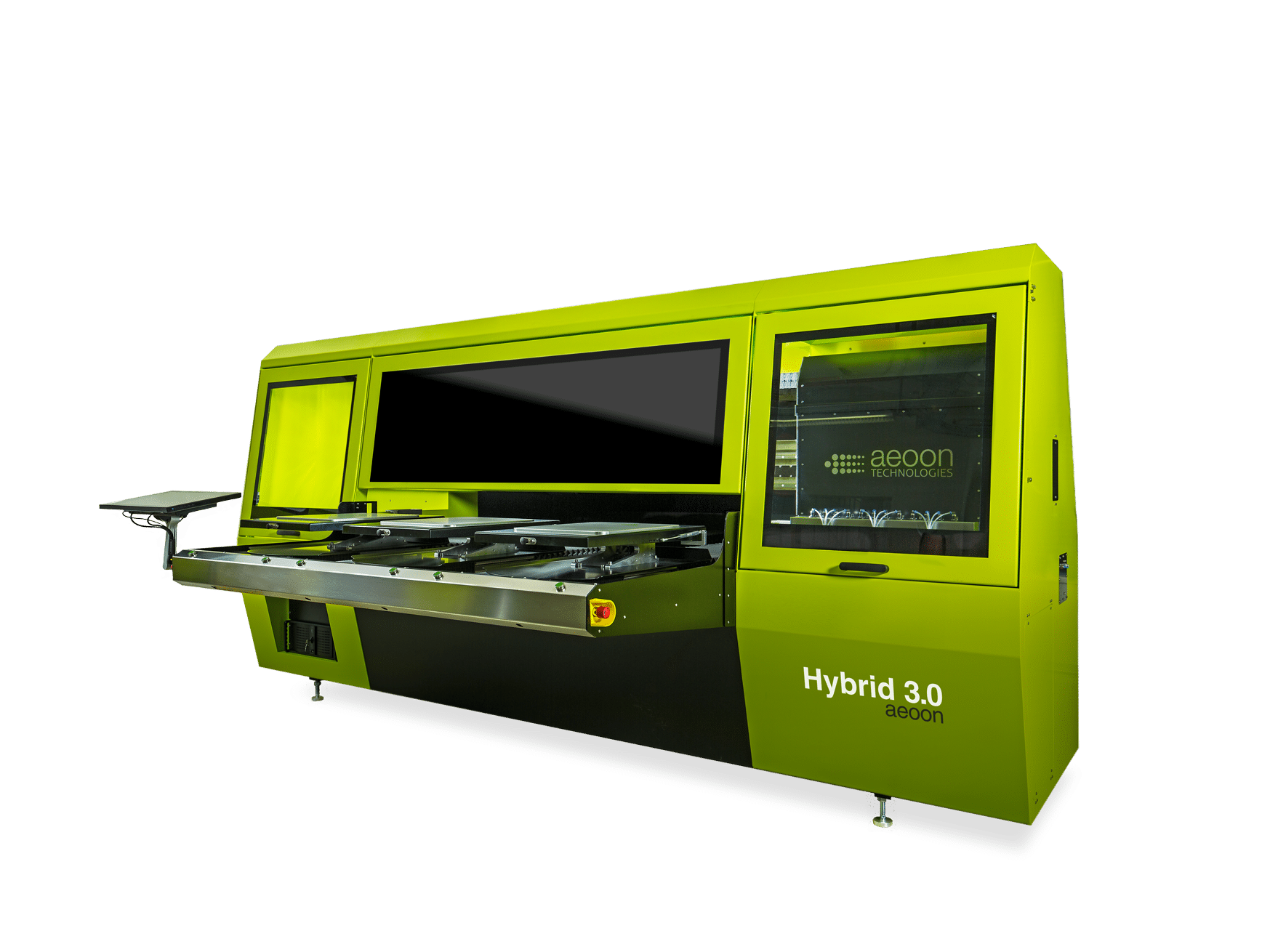
A hybrid printing setup combines screen printing stations and inline digital heads, usually DTG or inkjet modules, into one cohesive line. This allows you to lay down screen-printed underbase or special effects, then immediately add high-resolution digital colors without changing fixtures. For a step-by-step tutorial on integrating a hybrid DTG printer into your existing setup, thorough planning is key.
Start by confirming electrical requirements and layouts. Your press must accommodate not just the screens but also the digital module’s footprint and possible pretreatment stations. Many shops find they need new outlets, dedicated circuits, or ventilation to handle both screen and digital equipment. Learn more about retrofitting a hybrid DTG on screen printing systems and which configurations might best suit your floor plan.
Also consider your press operator’s role. Hybrid solutions require some digital expertise for color management and software setup, skills not typically part of a standard screen-press operator’s background. (For a deeper technical overview, see What Is Hybrid Printing & How Hybrid Printers Work.) And if you’re still deciding whether to invest, you can check out whether a hybrid printer is right for your operation before finalizing your plan.
Hybrid Workflow Integration
Once the hardware is installed, the next step is syncing screens and digital processes. Scheduling needs to address screen prep just as carefully as RIP software tasks for the digital module. According to Lawson’s blog on digital vs. hybrid printing, operators should test each design in small batches. Look for alignment issues between the screen underbase and digital layers, and refine registration settings to maintain crisp detail.
A typical workflow might be:
- The pre-press team prepares screens for the underbase or special effects.
- RIP software sets up the digital portion, focusing on color profiles and resolution.
- Garments load into the carousel, receiving screen print layers first.
- Digital heads add CMYK or variable data immediately after the screen station.
- Printed garments move to drying or curing systems without reloading.
This allows you to capitalize on the strengths of both methods without incurring extra downtime or re-registration steps. For instance, you can screen-print a white underbase on dark garments, then rely on digital color passes for photorealistic images. And if you’re curious about scaling production to handle more volume, check out how a hybrid DTG printer helps scale apparel printing.
Because hybrid lines integrate multiple processes in-line, you’ll save time on setups, keep throughput high, and have the option to personalize designs within the same run. (See how hybrid DTG printers are driving the next wave of textile printing in many global markets.) The payoff is greater flexibility and an expanded roster of services you can offer your clients.
Frequently Asked Questions
Q: Is it difficult for a traditional screen-print shop to learn hybrid equipment?
A: It can be a learning curve, but most suppliers offer training modules and support. Once your team understands basic digital printing concepts, they’ll adapt quickly.
Q: How do I handle different ink chemistries in one setup?
A: Look for hybrid systems specifically designed to integrate screen inks and digital formulations. Manufacturers often provide guidelines to ensure compatibility without clogging or color issues.
Q: Will I need additional pretreatment systems?
A: It depends on your digital ink set and substrates. Some shops add a dedicated pretreatment station upstream; others integrate pretreatment at the digital head for dark garments.
Q: Is hybrid printing primarily for T-shirts?
A: While apparel is common, hybrid tech applies to labels, packaging, and beyond. Nearly any item once screen-printed can leverage an inline digital module for variability or detail.